What I Built (In Plain English)
Deploying code by manually logging into production servers and typing terminal commands is slow and creates dangerous human errors.
I set up an autonomous workflow using Google Antigravity AI that compiles the application, runs pre-flight tests, triggers the deployment CLI, and verifies that the live website is healthy and serving correct HTTP headers—without leaking private passwords or server IP addresses.
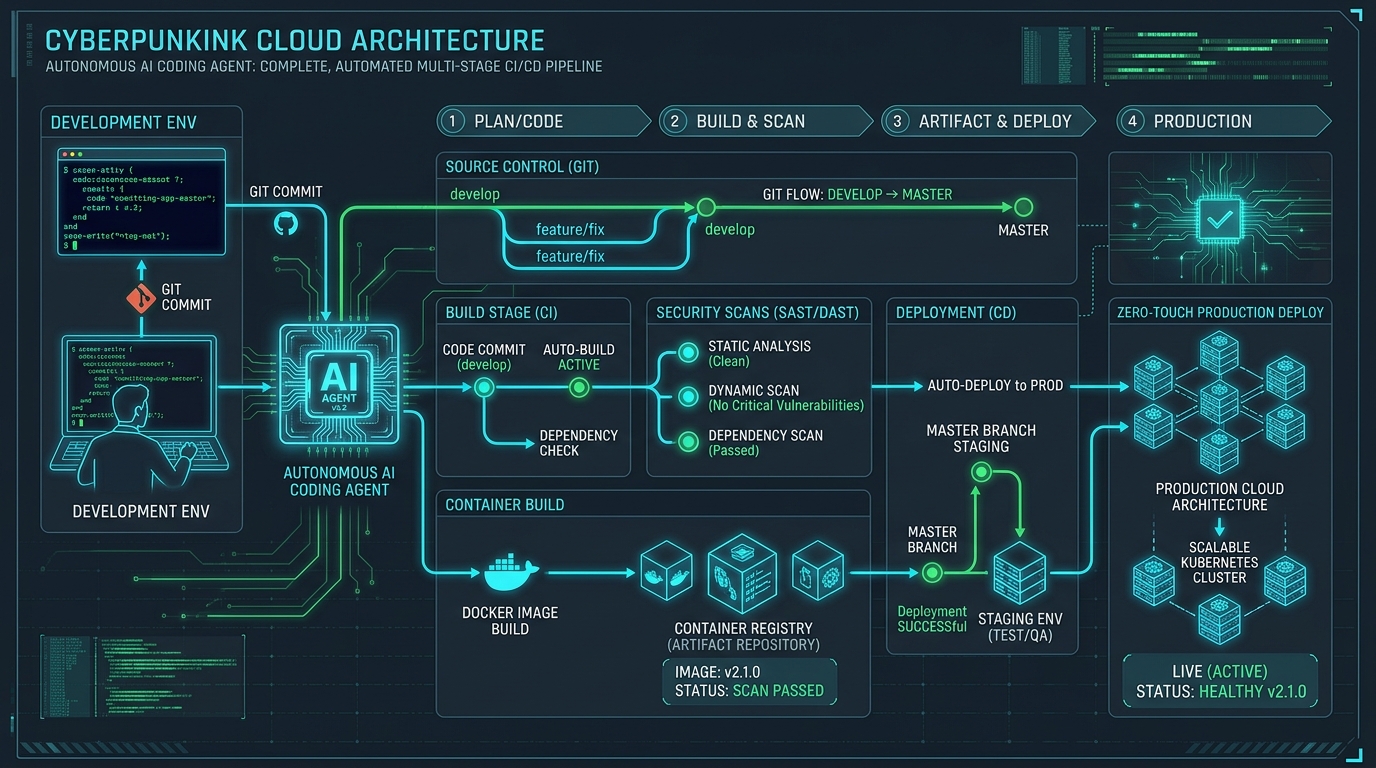
⚠️ Tech Ahead: The sections below dive into secret and host abstraction patterns, prompt specifications, deterministic pre-flight build checks, and automated post-deployment diagnostic matrixes.
Architectural Principles
- Host & Secret Abstraction: Infrastructure hostnames, SSH keys, and tokens are encapsulated in environment variables and CI/CLI tooling, never exposed in LLM prompts.
- Deterministic Build Pre-Flight: Type checking, linting, and production builds must pass locally before triggering remote artifact synchronization.
- Automated Health Probing: A deployment is not complete until
/api/healthreturnsHTTP 200 OKand response headers match security specifications.
The Operational Prompt
Execute an autonomous zero-touch deployment and live health verification for this application:

1. **Pre-Flight Validation**:
   - Run local linting, type checks, and production build suites to ensure a 100% clean bundle.
   - Verify git tree cleanliness and ensure the branch is aligned with upstream.

2. **Automated CLI Deployment**:
   - Trigger the project deployment CLI routine (e.g. `./deploy.sh` or the configured deployment runner).
   - Stream and monitor remote deployment progress, ensuring dependency installation, build steps, and process supervisor reload (PM2/Docker/systemd) execute without error.

3. **Post-Deployment Verification**:
   - Query the production health check endpoint (`/api/health` or root) to confirm `HTTP 200 OK`.
   - Validate live HTTP response headers (caching directives, SSL, and security headers).
   - Output a deployment summary table with release version, exit status, and latency metrics.
Post-Deploy Diagnostic Matrix
| Metric | Target | Failure Action |
|---|---|---|
| Pre-Flight Build Exit Code | 0 (Clean Turbopack/Next.js) |
Abort deployment immediately. |
| Process Supervisor Reload | PM2 online / Docker healthy |
Revert to previous release artifact. |
HTTP Status (/api/health) |
200 OK |
Check supervisor error logs. |
| Header Integrity | Strict-Transport-Security, X-Content-Type-Options |
Verify Nginx edge configuration. |
— [ DISPATCH TRANSMISSION COMPLETE // END OF FILE ] —